Hardware & AI · 2026
Freyja
A wearable AI journaling companion that turns moments from your day into a minimalist journal.
- Status
- Work in progress
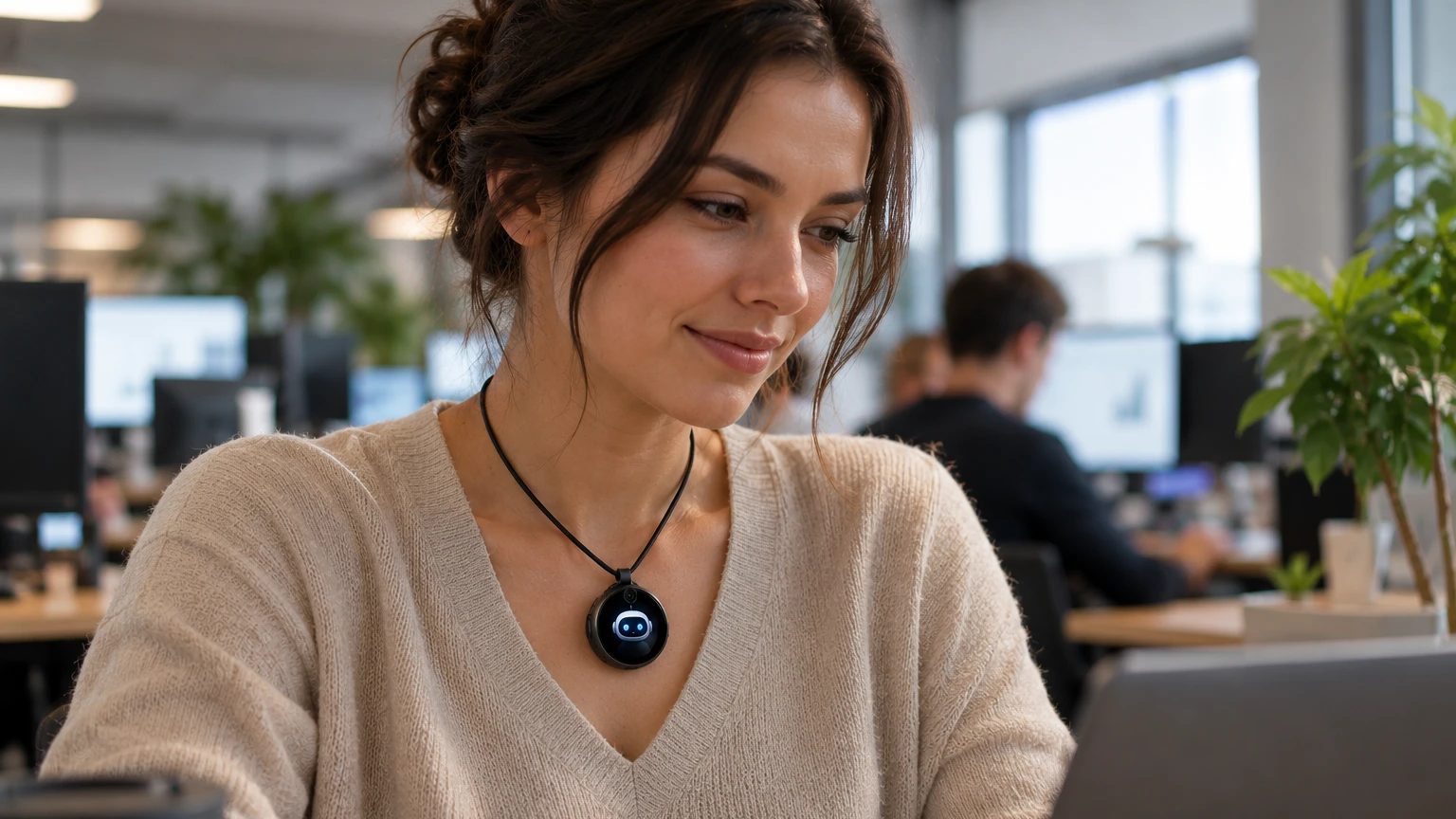
Freyja is my daughter. She’s two. This little device carries her name, so it had better be good.
Most AI assistants want your attention. I wanted to build one that stays out of the way. Freyja is a wearable that helps you journal your day, without reaching for your phone.
It listens, takes snapshots and narrates timelapses. Then it turns those moments into a simple, time-stamped journal. The goal isn’t to record everything. It’s to help you make sense of your day.
Here’s the catch, and the whole point. Only text goes into the journal. The images and voice clips? Permanently deleted.
An entry looks like this:
Morning Journal — Office
09:00 — Arrived at the office, prepared coffee and reviewed daily priorities.
10:00 — Focused on scheduled tasks and routine work activities.
11:00–12:00 — Continued planned work, organised outstanding tasks and prepared for lunch.
Low-fi on purpose. Just the shape of the morning.
Problem
Can an AI help you reflect on your day without adding another screen, notification or task? Phones are useful. They're also the thing that interrupts the moment.
Research
My hypothesis: people may be more comfortable with AI when it's less intrusive and careful about what it keeps. So Freyja is something you wear, and it keeps a journal of text, not a growing archive of recordings.
Prototype
It's built on the Seeed Studio SenseCAP Watcher and an ESP32, paired with a companion app that sets how it captures audio, snapshots and timelapse narration. Processing is part local, part cloud, with a sanitisation step that turns everything into text.
In people’s hands
The interaction is deliberately subtle. Freyja blends into the day. The real moment comes later, when you open the journal and see your day laid out as a timeline.
What happened
The whole prototype is one trade-off: capture enough context to make reflection useful, without keeping the raw material. Only text survives. Images and voice clips are permanently deleted.
What’s next
A bigger companion app, and better support for reflection. I also want to look at facial recognition, with privacy and the limits of capture treated as part of the design problem.
How it was designed
The Double Diamond, in the order it actually happened. Real projects loop back, and this one did too.
- Discover
Started with a question: can AI help people reflect on their day without another screen, notification or task?
- Define
Framed a hypothesis: people may be more comfortable with AI that is less intrusive and careful about what it keeps.
- Develop
Built a wearable on the Seeed Studio SenseCAP Watcher and ESP32, with a companion app that sets how it captures audio, snapshots and timelapse narration.
- Define
Drew a hard line: only text goes into the journal. Images and voice clips are permanently deleted.
- Develop
Added a sanitisation step, with processing split between the device and the cloud.
- Deliver
The output is a simple, time-stamped journal you open when you choose to.
- Discover
Next loop: a bigger companion app and facial recognition, with privacy and the limits of capture as part of the design problem.
UX practices
- Calm technologyFreyja stays in the background during the day and asks for nothing.
- Pull, not pushThere are no notifications. The value arrives when you decide to open the journal.
- User controlSettings in the companion app decide what gets captured and how.
Service design
- Privacy by designData minimisation is built in. Only text survives, and the raw images and audio are deleted.
- Frontstage and backstageFrontstage is a quiet wearable and a timeline. Backstage is capture, local and cloud processing, and sanitisation.